
Marketplace AI and ecommerce content news
Track the platform changes and AI workflow launches that shape how sellers build listings, product images, A+ content, and storefront assets.

Amazon AI Shopping Makes Product Image Facts Harder to Ignore
Amazon's AI shopping direction puts more pressure on product pages to show accurate visual facts. Sellers need images that support attributes, comparisons, and buyer decisions.

AI Shopping Assistants Make Product Image Proof More Important for Ecommerce Sellers
AI shopping assistants are moving product discovery toward comparison, attributes, and evidence. Product images now need to prove claims and support product-page decisions.

Amazon Prime Day 2026 Gives Sellers a Short Window for Listing and A+ Visual QA
Amazon Prime Day 2026 is scheduled for June 23-26, giving sellers a short runway to check listing images, A+ modules, product facts, and mobile visual quality.
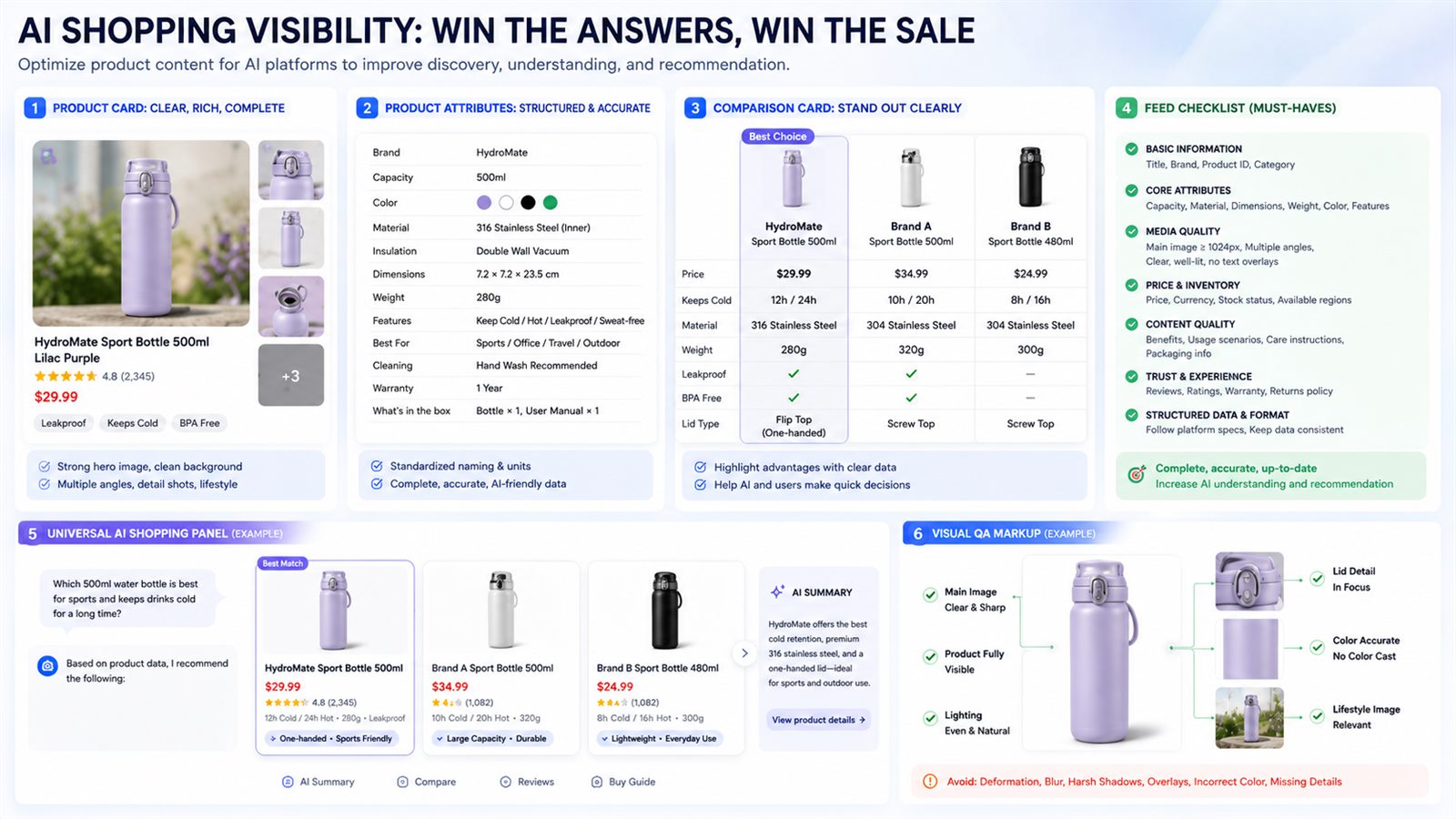
Google Merchant Center AI Performance Insights: 2026 Seller Guide
Google's AI Performance Insights report measures organic visibility across AI Mode and AI Overviews. Here is what it reports, what it cannot prove, and how sellers can turn its data into a product and image QA workflow.

Amazon Seller Assistant and Creative Studio Raise the Bar for Product Visual QA
Amazon's latest agentic AI seller tools point to faster creative and operational workflows. Product visual QA will matter more as sellers create more ad, PDP, and listing assets.

Google Asset Studio Updates Point to Faster AI Creative, but Product Visual QA Still Matters
Google's latest Asset Studio updates point to faster AI-assisted ad creative, making accurate product visuals and product page QA more important for ecommerce teams.

Amazon Expands Alexa for Shopping, Raising the Bar for Product Visual Proof
Amazon's expanded Alexa for Shopping and AI shopping features point to a future where clear product visuals, A+ Content, and structured PDP proof matter more for discovery and conversion.
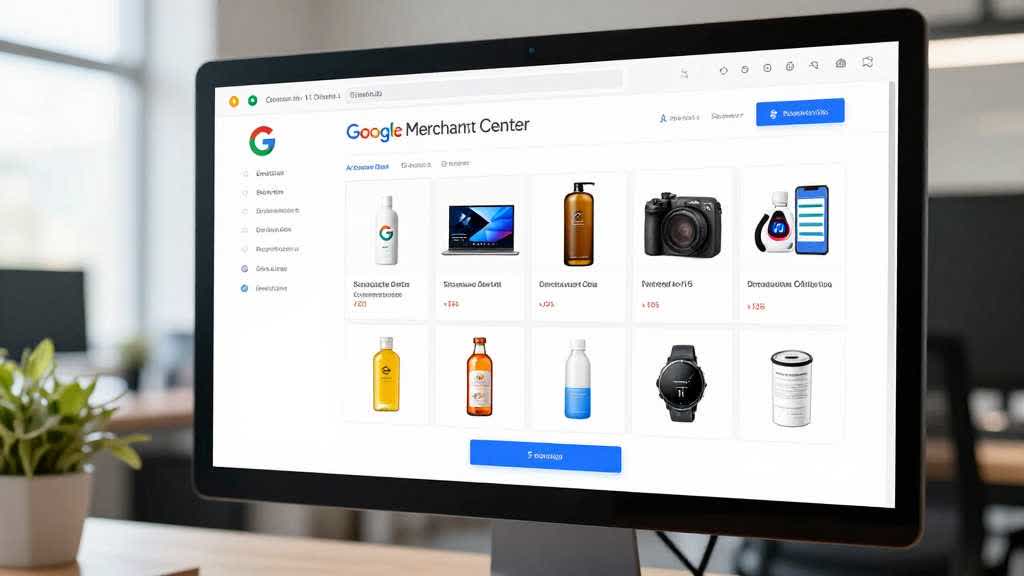
Google Merchant Center AI Product Import Beta Raises the Bar for Product Page Image QA
Google Merchant Center's AI product import beta makes product page consistency more important for sellers using product images, structured data, and shopping feeds.

Amazon Dynamic TV Creative Signals Product Images Are Moving Beyond the Listing Gallery
Amazon Ads' Dynamic TV Creative update shows that product imagery is becoming part of dynamic creative systems across listing, A+ Content, shoppable video, and campaign assets.

AI Listing Optimization Tools Make Amazon Visual QA More Important
AI tools are speeding up Amazon listing optimization, but sellers still need to check product images, A+ Content, variants, and SKU truth before publishing.

Shopify AI Channels and Catalog: 2026 Product Data QA Guide
Shopify now distributes eligible catalog data to AI shopping channels. This guide separates Shopify's reported results from its product rules and gives merchants a SKU-level data and image QA process.
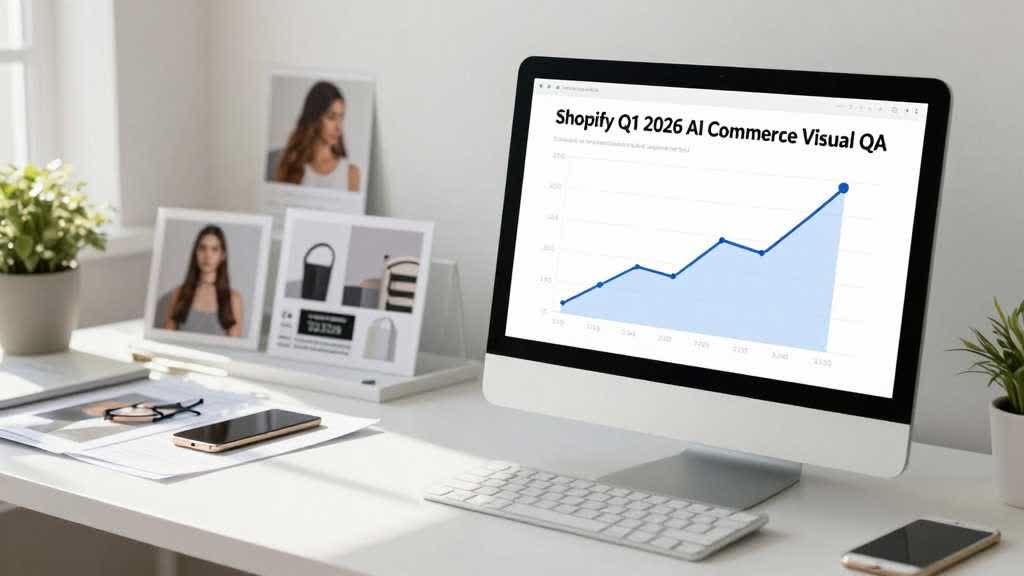
Shopify Q1 2026 Shows Why Product Visual QA Matters for AI Commerce
Shopify's Q1 2026 results point to AI-assisted shopping becoming a real commerce workflow, which raises the value of accurate product visuals.

Amazon Shop Direct Feeds Make Product Visual Quality More Important
Amazon's Shop Direct feed expansion gives merchants another reason to keep product images, catalog data, and PDP content consistent across channels.
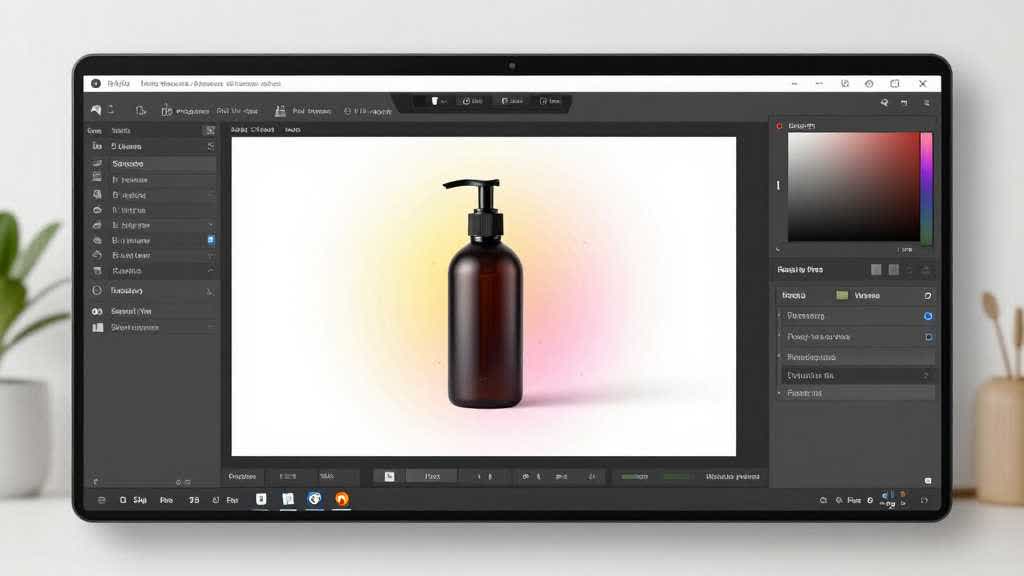
Shopify AI Media Generation for Product Photos
Shopify's public AI product updates show product photo editing moving into daily merchant workflows, making product-media QA more important.

Amazon AI Sponsored Brands Collections and Product Discovery
Amazon's new AI-powered Sponsored Brands collections point to a more automated product discovery layer where catalogs, PDPs, and product visuals need to work as one system.

Designkit Launch Shows AI Product Photography Tools Compete on Fidelity and Speed
Designkit's launch is another signal that AI product photography tools are becoming production infrastructure for ecommerce teams.

Bandy AI Launch Signals Fashion Model Tools Are Moving Into Ecommerce Workflows
Bandy AI's launch is another sign that AI fashion model tools are shifting from novelty demos to practical ecommerce production workflows.
AI Product Page Design Tools Are Moving From Single Images to Full PDP Workflows
Current search results show product-page AI tools positioning around full page workflow, source images, layouts, PDP modules, and channel-ready visual assets.

eBay OPEN25 Expands AI Seller Tooling for Faster Listing and Support Workflows
eBay's latest seller update shows how the platform is using AI and automation to reduce repetitive work across customer messaging and listing operations.

Amazon AI Image Generator Shows Why Lifestyle Product Visuals Are Becoming Platform-Native
Amazon's advertising image generation tools show how lifestyle product visuals are moving closer to platform-native seller workflows.

AI Shopping Assistants Make Product Content Quality More Important for Ecommerce Teams
AI shopping assistants and platform-native content tools are turning product content into structured input for discovery, merchandising, and conversion.

Walmart Marketplace Adds AI Listing Tool and Smart Assistant for Sellers
Walmart Marketplace is deepening its AI push with a listing tool and Smart Assistant designed to help sellers move faster and improve product page quality.

Amazon Accelerate 2025 Adds Shoppable A+ Content and Agentic Seller Tools
Amazon used Accelerate 2025 to show how AI, analytics, and interactive A+ content are being pushed deeper into the seller workflow.

Amazon Listing AI and A+ Content: 2026 Seller Review Guide
Amazon's listing AI can draft product records and A+ modules at scale. This guide explains Amazon's reported results, the limits of those metrics, and a seller-controlled ASIN review workflow.