
Amazon Accelerate 2025 Adds Shoppable A+ Content and Agentic Seller Tools
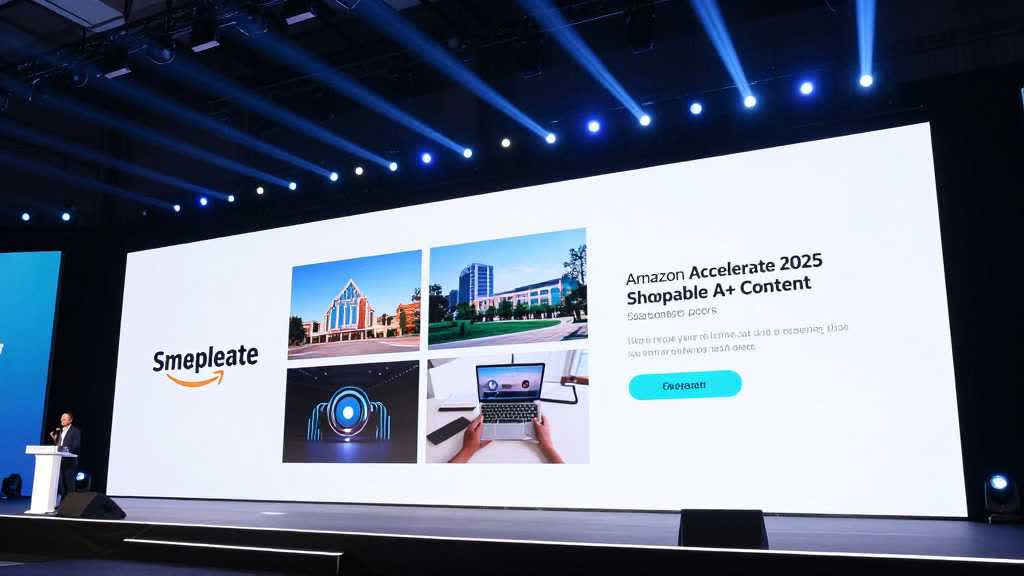
On September 18, 2025, Amazon used its annual Accelerate seller conference to preview a more interactive future for seller tooling and branded content. The headline items included an agentic version of Seller Assistant, expanded analytics, and new shoppable A+ Content features that let sellers create interactive branded product displays.
For ecommerce content teams, the message is practical. Amazon wants richer product pages to carry more product discovery and buying intent.
Quick Summary
Amazon Accelerate 2025 points to a more interactive future for A+ Content. Branded content is moving closer to shoppable merchandising, so sellers should make A+ modules modular, reusable, and tied to actual buying decisions.
What happened
In its Accelerate 2025 recap, Amazon said Seller Assistant now includes agentic capabilities that help sellers understand context, reason through problems, and take action with permission.
Alongside that broader AI push, Amazon highlighted a content-specific update: new shoppable A+ Content features. According to Amazon, these features let sellers create interactive product displays with brand story carousels and custom collections directly inside A+ experiences.
That matters because A+ content has traditionally been informative and visual, but not always action-oriented. With shoppable modules, Amazon is moving branded content closer to the point of conversion.
Amazon also positioned the update alongside other infrastructure changes, including new analytics tools and logistics improvements, suggesting that content creation, merchandising, and operational decision-making are starting to converge inside a more connected seller system.
Why shoppable A+ Content matters
A+ content has long helped brands tell a richer story, but its role often stopped short of being interactive merchandising.
Shoppable A+ changes the work in a few important ways. Brand storytelling gets closer to purchase intent because a customer can move from inspiration to action inside a richer content area. Content teams need to think more like merchandisers because module order, product grouping, and collection logic now affect the buying path. Modular content becomes more valuable because interactive branded collections work best when teams already use reusable sections, comparison logic, and consistent brand architecture.
Why Amazon's agentic direction matters too
The content update is important on its own, but it becomes more meaningful in the context of Amazon's wider AI direction.
When Amazon talks about agentic seller tools, it is signaling that sellers should expect AI to help with more than content generation. The broader vision is a seller environment where AI can:
- surface opportunities
- suggest actions
- connect data across workflows
- reduce the amount of manual switching between tools
For content teams, that could eventually mean a workflow where AI helps identify poor-performing detail pages, recommends improvements, and supports faster revisions across product collections.
The practical implication for brands
Brands should read this announcement as a reason to invest in better A+ content operations now.
The useful work is modular content that can support:
- brand storytelling
- feature explanation
- collection-level merchandising
- faster product discovery
- stronger conversion paths
If Amazon continues to make A+ more interactive, weak content systems will become easier to spot. A module that repeats generic brand language will struggle beside a module that answers a buyer's comparison, fit, size, material, or use-case question.
What to do next
Start with the current A+ structure. Check whether the modules guide a shopper through a decision or repeat generic brand language. Then standardize reusable module types such as comparison sections, brand story carousels, benefit grids, and related-product collections.
Teams should also map how each module moves shoppers toward a product choice. Which module explains the brand? Which one compares products? Which one answers objections? Which one supports the final click? Product groupings, image sequence, module copy, and live product facts should stay aligned before any interactive or shoppable module goes live.
LoomaDesign workflow for shoppable A+ planning
Amazon A+ Content sits inside the broader product detail page. Before a seller writes modules, the page needs accurate main images, useful secondary images, lifestyle scenes, clean product photos, and product facts that shoppers can trust.
Use Product Detail Page Images when a product page needs a connected visual sequence before A+ modules are planned. Use Amazon A+ Content AI when the team needs faster module concepts from product facts and images. Use Additional Product Images when related-product collections need clearer detail, scale, or comparison support.
For deeper planning, review Amazon A+ Content AI Templates, Amazon A+ Content AI vs Design Agency, and Amazon A+ Content AI Examples.