
Amazon Expands Alexa for Shopping, Raising the Bar for Product Visual Proof
Amazon announced a set of agentic AI shopping updates on May 13, 2026, including expanded Alexa for Shopping capabilities, Buy for Me, Interests, Lens, and improved product discovery experiences. The update is aimed at making shopping more conversational, proactive, and assistive.
For ecommerce sellers, the practical takeaway is clear: product detail pages need to become easier for both shoppers and AI-assisted shopping systems to interpret.
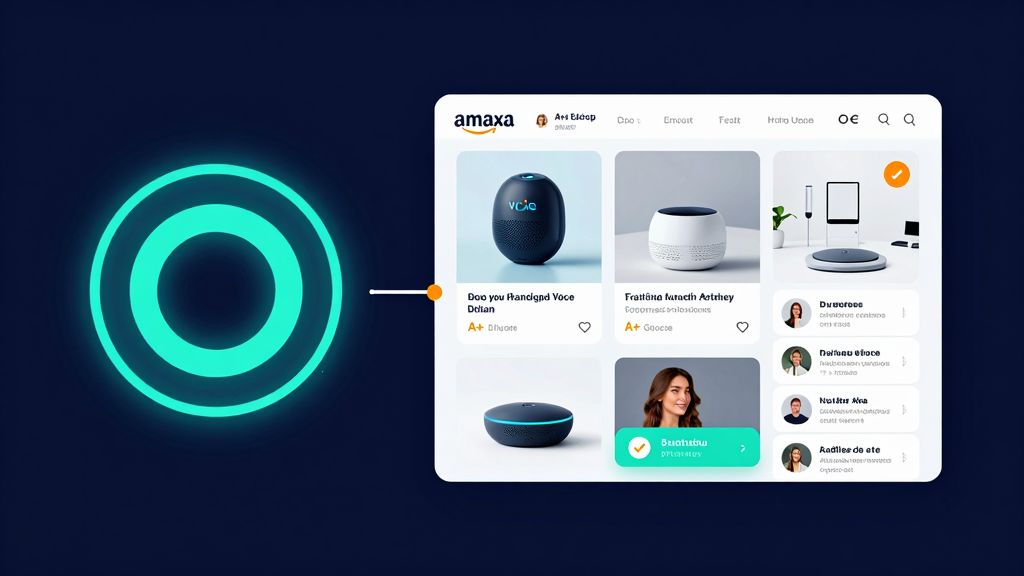
What Changed
Amazon's announcement describes a wider AI shopping experience that can help customers discover products, keep track of interests, compare options, and move through shopping tasks with less manual searching. Alexa for Shopping is positioned as part of that shift.
Sellers can keep existing listings, but weak product pages have less room to hide. When a product's images, A+ Content, bullets, and comparison details fail to explain the offer clearly, AI-assisted shopping may expose that weakness faster.
Why Product Visuals Matter More
AI shopping tools can help a customer compare products, but they still depend on the information available from listings, product pages, images, reviews, and structured content. A PDP with unclear images gives both the shopper and the assistant less useful evidence.
That makes visual proof more important in several areas:
| Product page asset | Why it matters for AI-assisted shopping |
|---|---|
| Main image | helps quick product recognition and search result confidence |
| Secondary images | answer scale, use, material, compatibility, and included-part questions |
| A+ Content | gives room for comparison, feature proof, use cases, and brand trust |
| Detail closeups | support material, construction, controls, finish, and quality claims |
| Variant images | reduce confusion across colors, sizes, bundles, and models |
| Mobile-readable modules | keep information usable when shoppers review AI-recommended products on phones |
The seller risk goes beyond ranking. It is interpretation. If the product image set leaves the offer unclear, the page may look weaker next to competitors that show clearer proof.
What Sellers Should Check First
The fastest audit starts with the image stack.
Look at the main image, gallery, and A+ Content as one product explanation. The first image should identify the product. Secondary images should answer practical doubts. A+ modules should add deeper proof without repeating the same hero shot.
Good questions to ask:
- Can a shopper understand size without reading the full specs?
- Is the product's use case visible?
- Are important details shown close enough to inspect?
- Are variants easy to compare?
- Does A+ Content explain what the gallery cannot?
- Do the images remain useful on mobile?
- Are claims supported by visual evidence?
This is especially important for products where buyer confusion leads to returns: apparel, bags, accessories, small appliances, beauty, electronics accessories, home goods, and multi-variant products.
LoomaDesign workflow for AI shopping visual proof
LoomaDesign helps sellers create product detail page images, Amazon listing visuals, and A+ Content images that answer concrete buyer questions. That matters more as AI-assisted shopping makes product comparison faster.
The product detail page workflow can help teams create a clearer visual set for main gallery, lifestyle, detail, comparison, and A+ modules. The Amazon A+ Content AI workflow supports longer module visuals for proof, comparison, and buyer-doubt resolution.
For sellers preparing for AI-assisted shopping, the useful work is to make the page easier to understand. Better product visuals give shoppers and shopping assistants more reliable information to work with.
Sources
- Amazon, Amazon's latest agentic AI innovations, published May 13, 2026.
- Amazon Ads, How to improve your product detail page for advertising, product detail page guidance for high-quality images, image quantity, zoomable assets, and A+ Content.