
Bandy AI Launch Signals Fashion Model Tools Are Moving Into Ecommerce Workflows
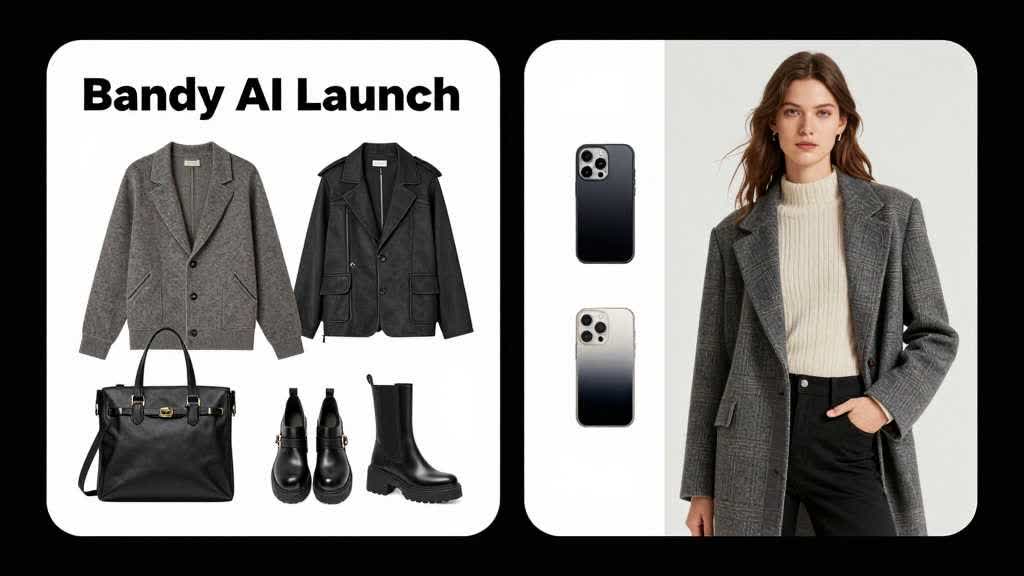
On August 22, 2025, Bandy AI announced photorealistic AI models aimed at ecommerce fashion and apparel brands. The launch is a useful market signal because it shows how fast fashion-focused AI imagery is moving from experimental demos toward production use.
That shift matters because apparel content is expensive to produce, difficult to scale, and highly sensitive to garment accuracy.
Quick Summary
Fashion sellers are adopting AI model workflows because they need more product images, faster collection launches, and lower production costs. The winning tools will be judged by garment accuracy, model consistency, and catalog workflow fit.
What turns this from a niche launch into a market signal
The Bandy launch matters because it sits inside a category where visual pressure is already high. Salsify's 2025 Consumer Research found that 71% of shoppers bought fashion and apparel online, 77% rate product images and videos as very or extremely important, and 17% purchased after using a virtual try-on or placement preview tool.
The launch alone cannot validate every AI model tool. It shows why apparel teams keep testing these systems. The category already depends on visual confidence, and digital shoppers are increasingly open to visualization help.
What is changing
The market is moving from experimental AI model images toward practical seller workflows:
- flat lay to model images
- AI fashion photoshoots
- model replacement
- catalog refreshes
- ad creative testing
These use cases are more specific than generic AI image generation.
Why this matters
Fashion ecommerce relies on visual confidence. Shoppers want to understand fit, drape, length, and styling. AI tools can help create more visuals, but they must preserve garment details.
That makes review and product fidelity the core challenge.
AI fashion model tools are valuable when they reduce photoshoot friction without changing the garment. Accuracy will matter more than novelty because buyers notice sleeve length, hem position, fabric weight, pattern placement, and whether the garment looks like the real SKU.
How This Connects to the Full Product Visual Workflow
This topic is one part of a broader ecommerce image workflow. Retouching and enhancement make source assets publishable, listing images explain the product quickly, lifestyle scenes make the use case concrete, and A+ or PDP modules turn the same product story into a deeper buying explanation.
For apparel sellers, the review should start with the real garment photo. Check color, fabric texture, sleeve, collar, buttons, pockets, stitching, and print placement before using an AI model output in a listing gallery.
Use AI Fashion Model Generator for model-context visuals, Flat Lay to Model Photo AI for workflow planning, and AI Product Image Enhancer when the source garment photo needs cleanup before model generation.
Source
- Primary source: Bandy AI is launched to transform ecommerce product imagery with photorealistic AI models
- Supporting research: Salsify 2025 Consumer Research