LoomaDesign

Virtual Try-On Workflow

Virtual Shoe Try-On

Create cleaner shoe try-on visuals for ecommerce listings, ads, and creative testing without turning every visual update into a new shoot.

Quick answer

Use LoomaDesign when you need shoe try-on images that keep the model natural while applying the reference item with believable scale, contact, perspective, and lighting.

At a glance

Built for shoe

The prompt path focuses on foot contact, sole grounding, ankle perspective, cast shadows, and realistic footwear scale so the final image feels like a real ecommerce try-on visual.

At a glance

Reference-first control

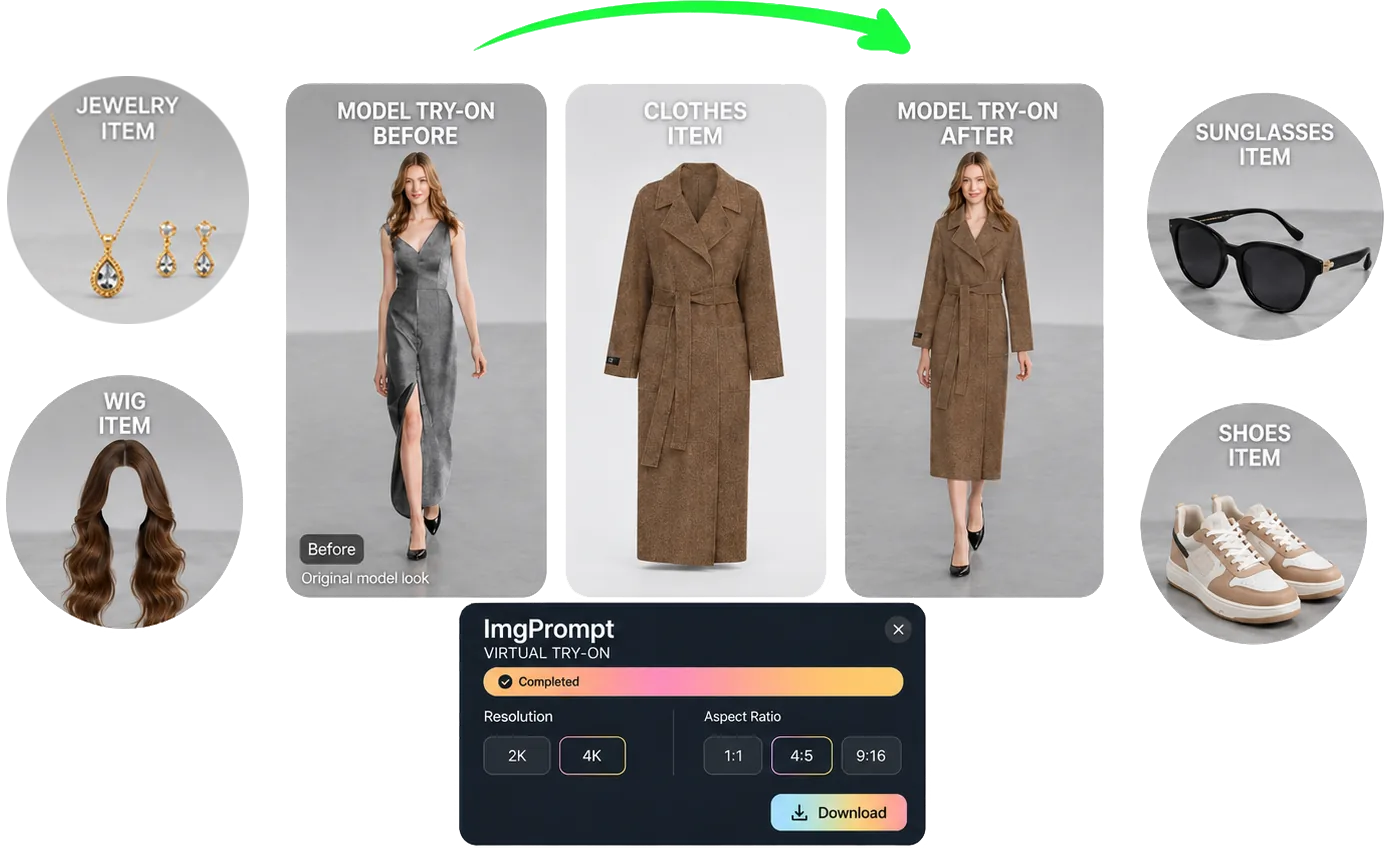
Upload a model image and an item reference, then keep the target person, pose, framing, and background stable while the selected item is applied.

At a glance

Commerce-ready outputs

Create visuals that are easier to use in listings, ads, PDP modules, and creative testing instead of loose concept art.

Use cases

Where this page helps ecommerce teams fastest

Create shoe try-on visuals for product listings and landing pages.

Test more shoe creative angles before committing to a shoot.

Support ecommerce teams that need faster footwear try-on visuals across campaigns.

Workflow

A clearer path from search intent to a usable output

Step 1

Upload the model image

Start with the person, pose, crop, and background you want the final image to preserve.

Step 2

Add the shoe reference

Upload the reference item so Looma can apply the shoe with category-specific scale, contact, and material rules.

Step 3

Generate the try-on visual

Create the final ecommerce image for listings, ads, or internal creative testing with the selected output settings.

Why Looma

What buyers usually need to understand before they try the tool

Why shoe try-on needs its own prompt path

Shoe visuals are judged by details that generic image editing prompts often miss.

  • Preserve the target model, pose, framing, and background while applying only the shoe reference.
  • Control foot contact, sole grounding, ankle perspective, cast shadows, and realistic footwear scale instead of treating every category like a generic item swap.
  • Avoid pasted-on results, broken anatomy, reference-person carryover, and unrelated object generation.

How ecommerce teams use it

The goal is faster production support for commercial visuals, not one-off novelty edits.

  • Create more listing and ad variants from existing product references.
  • Test product presentation before booking new photography.
  • Keep category-specific public pages available for future SEO and blog internal links.

FAQ

Questions buyers usually ask before they click in

Related resources

Continue into the Looma content cluster