Mostrar tops, vestidos, chaquetas y otras prendas sobre una persona.

Prueba virtual de ropa
Probador virtual de ropa con IA
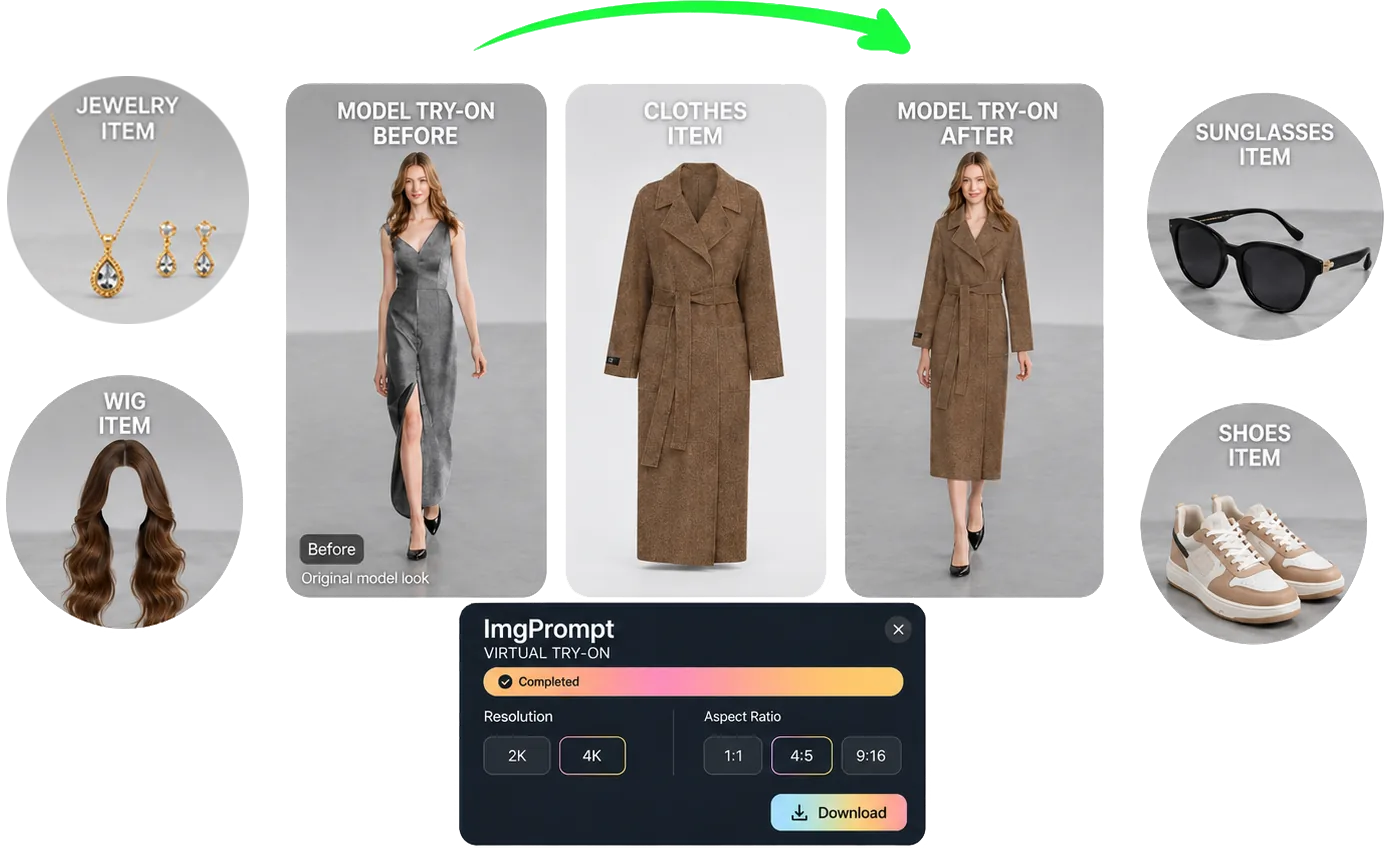
Aplica una prenda de referencia sobre una persona y revisa cuello, mangas, bajo, pliegues y oclusión para crear imágenes ecommerce. La página explica qué preparar, cómo trabajar y qué revisar antes de publicar.
Respuesta rápida
Probador virtual de ropa con IA sirve cuando el equipo necesita una imagen de ropa puesta para ficha y pruebas de anuncios. Prepara una foto de persona, la prenda bien visible y la pose deseada, revisa la identidad, el patronaje, el estampado, el color, el largo y las oclusiones y conserva solo las versiones aptas para ecommerce.
Casos de uso
Dónde ayuda más rápido a equipos ecommerce
Probar combinaciones de modelo y prenda antes de una sesión.
Añadir una referencia de ajuste más clara que una foto plana.
Flujo de trabajo
Un camino claro desde el input hasta una imagen usable
Paso 1
Prepara una referencia fiable
Reúne una foto de persona, la prenda bien visible y la pose deseada. Una fuente clara reduce correcciones posteriores.
Paso 2
Define la tarea visual
En LoomaDesign, el trabajo consiste en alinear la prenda con el cuerpo y revisar cuello, mangas, bajo y pliegues.
Paso 3
Compara y exporta
Revisa la identidad, el patronaje, el estampado, el color, el largo y las oclusiones y conserva las versiones que formen una imagen de ropa puesta para ficha y pruebas de anuncios.
Por qué Looma
Lo que conviene entender antes de probar la herramienta
Cuándo usar la prueba virtual de ropa
La herramienta aporta valor cuando cada imagen responde a una necesidad de producción concreta.
- Mostrar tops, vestidos, chaquetas y otras prendas sobre una persona.
- Probar combinaciones de modelo y prenda antes de una sesión.
- Añadir una referencia de ajuste más clara que una foto plana.
Detalles que deben sobrevivir a la generación
La revisión compara la referencia y la salida antes de aprobar una pieza para el catálogo.
- Comprueba la identidad, el patronaje, el estampado, el color, el largo y las oclusiones.
- Rechaza accesorios no incluidos y funciones que la documentación del producto no respalda.
- Revisa la imagen como miniatura móvil y también a tamaño ampliado.
Cómo integrarlo en el flujo ecommerce
Asigna cada versión aprobada a una ficha, anuncio o tarea de diseño. No publiques todas las variantes generadas.
- Entrega una imagen de ropa puesta para ficha y pruebas de anuncios al responsable de ficha o campaña.
- Registra por qué se rechazó una versión para ajustar la siguiente generación.
- Conserva la foto original como referencia de SKU para futuras iteraciones.
FAQ
Preguntas frecuentes antes de empezar
Recursos relacionados
Continúa con el contenido de Looma
Función relacionadaSolución
Probador virtual para ecommerce
Crea pruebas virtuales de ropa, calzado, joyería, pelucas y gafas de sol desde un mismo flujo con controles propios para cada categoría.
Abrir recurso
Función relacionadaSolución
Generador de modelos de moda con IA
Genera imágenes de prendas sobre modelos para catálogo y anuncios. Controla persona, ajuste, pose y contexto sin perder el diseño real.
Abrir recurso
Función relacionadaSolución
Generador de imágenes lifestyle para Amazon
Sitúa el producto real en un contexto de uso creíble para galerías de Amazon, módulos A+ y pruebas de anuncios.
Abrir recurso
Función relacionadaSolución
Contenido A+ de Amazon con IA
Planifica módulos A+ a partir de datos reales del producto, beneficios y dirección visual. Prepara tareas claras para diseño, copy y revisión.
Abrir recurso